Posts

Speech and Variations in Sensations
Image
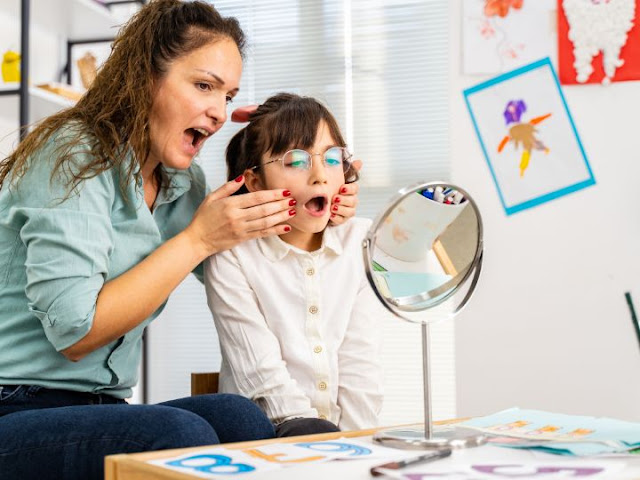
Sensory abnormalities reduce an individual's ability to process sensory information from their surroundings. People with sensory deficits may get too aroused by information from their surroundings, such as sounds, touch, and sight. This is one component of the autism diagnosis. Imagine walking into a classroom after emerging from a shadowy area. The lights are turned to maximum brightness, and your eyes fight to adjust. Even when a headache begins, the lights stay on. Meanwhile, your teacher speaks and provides students with instructions. It would take a lot of effort to concentrate. This is one example of how sensory impairments can make regular tasks difficult. Some people with sensory processing disorders may struggle to process many sensory cues, such as the sound of the teacher's voice or the feel of their clothing against the skin. As a result, participating and paying attention may be challenging. For some neurodivergent people, this occurs frequently, and sensory dysreg...

Speech and Variations in Sensations

Image
 Sensory abnormalities limit a person's capacity to process sensory information from their surroundings. People with sensory impairments might get overstimulated by information from their surroundings, such as sounds, touch, and sight. This is one part of autism diagnosis.  Imagine entering a classroom after emerging from a shadowy area. The lights are turned up to full brightness, and your eyes struggle to adjust. Even when a headache begins, the lights remain on. Meanwhile, your teacher speaks and gives students directions. It would require a lot of effort to focus.  This is just one example of how sensory issues may make routine situations tough. Some people with sensory processing disorders may have difficulty processing multiple sensory cues, such as the sound of the teacher's voice or the feel of their clothing against their skin. As a result, participating and paying attention may seem difficult. For certain neurodivergent people, this happens frequently, and senso...

Assessment of Sensitivity in Perceptual Processing

Image
If you think you or someone you know may be sensitive to certain stimuli, you should talk to your doctor about your concerns. They can recommend a physician, psychologist, or occupational therapist who specialises in treating patients with sensory processing sensitivity to you or the patient. Medical practitioners use several methods to evaluate a patient's sensitivity to sensory processing. This usually involves looking at how a person's sensory-related behaviours affect their everyday functioning and that of their family. Interviews with the person's instructors or carers may be part of the evaluation process. I was interviewing the subject. Their teachers conducted surveys on the subject's sensory-related behaviour. I am physically inspecting or observing anything. Should other concerns exist, a multidisciplinary team including diverse professionals might assess the individual. They could evaluate the person's capacity for focus and attention, learning, social ...

Emotional dysregulation and regulation.

Emotional dysregulation and regulation In these fast-paced and often stressful times, we must maintain our composure and positivity in order to meet the demands placed on us by ourselves and society. We can use unconscious emotional control processes to deal with challenging situations and adjust to prospective stressors. Emotional regulation is the ability to properly control and respond to an experience while building resilience. Emotional obstructions, on the other hand, can keep people from listening. They can become emotionally stuck at an early age, particularly if they have experienced the first trauma. Traumatic experiences, whether long-term or one-time, can create emotional dysregulation, impeding normal cognitive and subjective development and excellent listening. Good listeners are also effective learners, communicators, and emotionally healthy people. Consider a person attending a lecture or a child attending school who is relaxed, cheerful, and able to listen intently t...

ADHD Throughout Life

In addition to acting younger than their peers, children with ADHD usually exhibit difficulties in autonomous functioning. Many children with ADHD may also have moderate delays in language, motor skills, or social development, which are not symptoms of ADHD but frequently co-occur. They have limited tolerance for frustration, struggle to manage their emotions, and often experience mood swings. Academic failure or delays, driving problems, peer and social concerns, risky sexual behaviour, and substance abuse are some of the potentially serious issues that children with ADHD may face throughout adolescence and adulthood. Co-occurring disorders, such as oppositional defiant disorder or conduct disorder, may result in more severe negative behaviours. Teenage females with ADHD are more prone than males to develop eating disorders. As previously stated, most ADHD instances (50-80%) continue into adolescence, though hyperactivity may decrease over time. ADHD in teenagers is a particular chal...
Support, Therapy, and Services for Individuals with Sensory Processing Sensitivity Although a person's sensory processing sensitivity symptoms may improve with time, treatment and support can help them deal with their current concerns and conduct. For example, a person may work with an occupational therapist to learn how to do simple things like getting dressed or cleaning their teeth. An occupational professional may use desensitisation therapy to reduce a patient's susceptibility to sensory stimuli. For example, a person may learn to deal with noisy stores by first spending a few minutes at each one. The individual may spend more time in the store over time. If a person's behaviour interferes with their regular activities, they may require assistance. For example, kids may find it disruptive in class, dislike combing or shampooing their hair, or be scared of swings. A multidisciplinary team of specialists and professionals may address these kinds of difficulties. In ...

How many Australian children are impacted by GDD?

How many Australian children are impacted by GDD? One of the most prevalent diagnoses for infants is global developmental delay . It affects 1% to 3% of children under five years old. Approximately 3,000 to 9,000 Australian children are diagnosed with GDD each year. The majority of these children with GDD also have intellectual disabilities. Global Developmental Delay occurs when a child takes longer than other children of the same age to reach typical milestones. The child has difficulties in at least two developmental areas. A child's cognitive, verbal, language, social, and emotional development may be delayed. Physical problems include difficulties with daily tasks and gross and fine motor skills. Proper muscle tone affects articulation and speech. Muscle tone influences both large and fine motor skills in daily chores. The presence of distributed mirror neurons in a child's brain with global developmental delay is discussed. These messages activate the brain's movem...