Posts

Strategies To Help Students With Autism Learn Outdoors

Strategies To Help Students With Autism Learn One of the biggest challenges for students with autism is learning how to interact and socialise with others. This can be a difficult task, especially when it comes to learning new things. There are a multiple strategies that parents and teachers can use to help autistic students learn outdoors. One of them is to provide support and encouragement. This means standing behind the student and helping them to reach their full potential. It's also important for parents to set reasonable expectations for their children. For example, autistic students may not be able to understand complex directions or learn quickly from one experience. It's best to give them short, manageable goals that they can achieve. This way, they know that they are making progress. In addition, teachers can provide assistance during class activities. This might include providing visual prompts or role-playing scenarios. Teachers can also create individualised lesso...

Is there any behavioural therapy for children with attention deficit hyperactivity disorder?

Yes, behavioural treatment can help children with attention deficit hyperactivity disorder manage their symptoms of inattention or hyperactivity. However, in most cases, particularly for people with severe ADHD, behavioural therapy works best when combined with medication. If you stop taking ADHD medications, you will lose the benefits. Some of the benefits include a more stable mood, reduced irritation, anti-depressive thinking, and a more focused mind. There are three primary behavioural therapies recognised for ADHD: Parent training is a type of therapy in which parents help their children change their behaviour. Managing an ADHD child can be more difficult than managing other children, so parents must be prepared to treat their children responsibly. This therapy attempts to strengthen the parent-child bond with the help of a psychologist and a social worker. They primarily instruct parents and other guardians on how to praise or provide positive reinforcement, which has proven t...

Myths About Autism

  Myths about autism that people believe: There are numerous misconceptions and fallacies about autism . It is critical to remember that "when you meet one person on the autism spectrum, you've met one person on the autistic spectrum," just as each person is unique and individual, with their own eccentricities, interests, and hobbies. Myth 1 If you speak, make eye contact, are a girl, or do not appear to be Autistic, you are not Autistic. Truth Autism affects people of all ages and manifests differently in each individual. Myth 2 Everyone on the autistic spectrum is a savant.   Truth  Popular culture influences the formation of stereotypes. Despite the fact that each autistic person has their own set of abilities and interests, it is estimated that approximately 30% of those on the spectrum are savants. Myth 3  In some way, everyone is "autistic."  Truth  The majority of people can identify with or understand some aspects of Autistic experiences. Alth...

What is the treatment for autism?

Image
Autism is a developmental disorder that affects how people behave and interact with their surroundings throughout their lives. It can be from mild to moderate. The brain does not develop in autistic people in the same way as it does in the general population. Autism is not a mental health or intellectual handicap, but some persons with autism do have these issues. If your child is autistic, you will be guided through the many autism treatment choices. A number of organisations offer education programmes and support services to children with autism and their parents or carers. Treatments for autism should begin as early in a person's life as possible. With the correct support and programmes, certain symptoms and social skills can be improved. Because each person with autism disorder is unique, the best results come from a treatment plan that is personalised to their specific needs. Intensive educational programmes and behavioural therapy are used to teach language and social skills....
Image
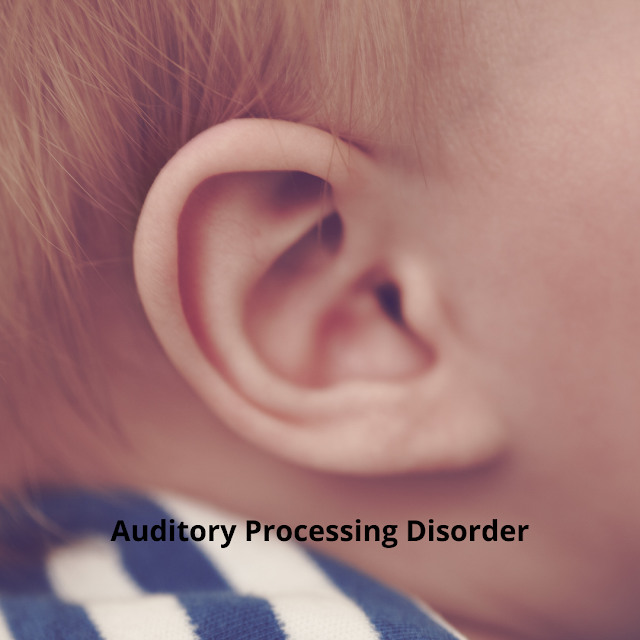
  How Does Auditory Processing Disorder Affect Your Child? Auditory processing disorder (APD) is a hearing loss that affects 3%–5% of school-aged children. This disorder, also known as central auditory processing disorder (CAPD), affects children's ability to comprehend what they hear. This is caused by a misalignment of their ears and brain. Something obstructs the brain's ability to recognise and understand sounds, particularly speech. If children with APD adopt the right strategies, they can excel in school and life. It is impossible to overestimate the value of early detection. If the issue is not recognised and addressed early, a child may experience hearing and learning difficulties at home and school. APD is an acronym for Auditory Processing Disorder. Your child's capacity to read, write, and spell, as well as the way they speak, may be affected by APD. Word ends may be omitted, and related sounds may be mixed up. They may also find it questioning to converse with o...

4 Advice to Manage Kids with Attention Deficit Hyperactivity Disorder (ADHD)

Image
1. Plan for Managing Behaviour ADHD can cause children to act out in unusual ways. As a result, techniques to guide your child towards proper behaviour will be included in your child's attention deficit hyperactivity disorder (ADHD) management plan. The following items might be included in a behaviour management plan: - Techniques for encouraging excellent behaviour - Social skills for helping your child get along with others - Techniques for managing your child's energy and weariness - Classroom support strategies for your child 2. Behaviour strategies to help children with ADHD Your kid's behaviour management plan will very indeed contain tactics to help your child learn how to behave cooperatively more often and in challenging ways less frequently. The following are some simple but effective behaviour strategies: - Environmental changes to make it easier for your child to behave well - Clear verbal instructions to help your child understand what you want them to do - Pr...

15 Behaviour Strategies for Children with Autism Spectrum Disorder

Image
1 – Explain what will happen next to the kid. 2-Acknowledge your child or students for complying with your wishes by setting expectations, being consistent, and following through. 4 – Make it clear to the kid what you expect from him and allow him to earn rewards for meeting them. 5 – Provide options 6 – Showing the kid the activity or item that he will be using next might assist some children with language challenges shifting from one activity to another. 7 – If possible, utilise a schedule to let the child know how his day will progress. 8- Allow a transitional object to be brought from one activity to the next. 9 – Instead of saying "stop" or "no," divert and redirect unwanted behaviour. 10 – If the kid appears to be overstimulated by sensory input, such as in a crowded environment, take him to a quieter location to de-stress. 11 – Provide clear, concise, and concrete instructions. 12 – Use teachable moments to your advantage. 13 – Many kids do better when given ...